Understanding it is not the same as being free of it.
Most people who find their way to Melissa have already done some version of therapy. They understand their history. They can name the patterns. The understanding is real. The relief has not followed.
That gap between insight and change is where this work begins.
Two ways to work with Melissa.
Melissa Martin, LCMHC, is an EMDRIA-Certified EMDR therapist and trauma specialist who sees clients through Miller Counseling. She offers two distinct formats depending on what the clinical picture calls for. Both are available in person in Charlotte and virtually across North Carolina.
Some clients come to Melissa while continuing with their current therapist. Others are starting fresh. Either way, the path into this practice starts with a free 15-minute consultation with me. That call exists to make sure the fit is right and the direction is clear — not to screen you out.
In person in Charlotte or virtual across North Carolina
Structured, theory-grounded therapy for clients working through trauma, stuck patterns, and nervous system dysregulation. Draws from ego state therapy, the Adaptive Information Processing model, Polyvagal Theory, and cognitive therapy — four frameworks that address trauma at every level simultaneously.
In person in Charlotte or virtual across North Carolina
For clients whose trauma has not shifted with talk therapy alone. EMDR uses bilateral stimulation to engage the brain's natural processing system and complete what it could not complete at the time. Research-supported. 90-minute sessions give the work room to go somewhere and close cleanly.
53 minutes · $280
This is not general talk therapy. It is structured, theory-grounded work designed for the aftermath of trauma — not just understanding what happened, but working through what it left behind.
Melissa draws from four frameworks that work together in a single clinical approach:
Ego state therapy treats the self as made up of distinct parts that developed in response to experience, particularly overwhelming or threatening experience. The part that shuts down, the one that pushes through, the one that rages, the one that disappears — these are not character flaws. They are a system doing what it learned to do. Ego state work helps you understand what each part developed to protect and moves toward internal coherence over time.
The Adaptive Information Processing model is the foundational theory underlying EMDR, and it informs how Melissa approaches talk therapy as well. It holds that psychological distress results from memories that were never fully processed and integrated. When something is too overwhelming, the brain stores it in a way that keeps it live — generating distress as if the threat were still present. AIP-informed therapy is oriented toward completing that processing rather than managing symptoms around it.
Polyvagal Theory describes how the autonomic nervous system organizes states of safety, threat, and shutdown — and how trauma dysregulates that system in ways that insight alone cannot reach. Melissa works at the level of nervous system state, not just cognition. What the thinking mind understands and what the body carries are two different things.
Cognitive therapy in this context is not standard CBT. It addresses the beliefs that trauma produces and that survive long after the events themselves have passed — the conviction that you are unsafe, that you are at fault, that connection is dangerous. Those beliefs are not just thought patterns to reframe. They are fed by unprocessed experience. This work goes after both.
These four frameworks work together in every session. Ego state identifies what part of you is activated. AIP provides the clinical orientation toward completing unfinished processing. Polyvagal grounds the work in nervous system reality. Cognitive work addresses what the experience has left you believing. Most clinical approaches address one or two of these layers. This one addresses all four.
90 minutes · $400
EMDR stands for Eye Movement Desensitization and Reprocessing. It is recommended by the World Health Organization and the American Psychological Association for the treatment of PTSD and trauma. It has been researched more extensively than most therapies in use today.
When something happens that the brain cannot process at the time — because it is too threatening, too painful, or too much — the memory gets stored in a way that keeps it active. It does not feel like the past. It shows up as reactivity, avoidance, hypervigilance, physical symptoms, or a persistent stuck feeling that talk has not shifted.
EMDR works differently from talk therapy in one essential way: you do not have to describe what happened in detail. You are asked to hold a brief awareness of the experience — sometimes just an image or a body sensation — while Melissa guides bilateral stimulation. In an in-person session, this typically looks like following her finger or a light bar with your eyes, or gentle tapping on your knees or shoulders. In a virtual session, tapping or auditory tones are used instead. The bilateral engagement allows both hemispheres of the brain to process the experience simultaneously rather than one side holding the memory while the other tries to think around it.
Most people find it less activating than they expected. The memory comes up. The processing happens. The session closes with regulation work to make sure you leave grounded rather than activated. You do not leave in worse shape than you arrived.
Melissa has been practicing EMDR since 2008 and holds EMDRIA Certification — the highest credentialing level offered by the EMDR International Association. She integrates the Felt Sense Polyvagal Model into her EMDR work, a somatic approach that builds nervous system capacity alongside the bilateral processing. For clients whose trauma is held in the body, that combination is more effective than the protocol alone.
On virtual EMDR: research consistently supports its effectiveness. A 2021 study in the Journal of EMDR Practice and Research found no significant difference in outcomes between in-person and telehealth delivery. Many clients also find that being in their own environment supports the nervous system regulation the work requires.
What this work addresses.
Both trauma-focused talk therapy and EMDR are appropriate for:
- Trauma and PTSD, including single-incident events, complex trauma, and developmental trauma from childhood
- Anxiety and panic responses that feel disconnected from current circumstances
- Emotional reactivity that arrives faster than thought
- Negative core beliefs that persist despite understanding where they came from
- Patterns that repeat across relationships, jobs, and situations despite genuine effort
- Complicated grief and loss
- Burnout that rest has not resolved
- Physical symptoms with a trauma or stress component
- A history that has been managed rather than worked through
If you have been in therapy — good therapy, with a good therapist — and found the ceiling, this is the work designed for that specific gap. That ceiling is not a failure of therapy or of you. It is what trauma that has not been processed at the level of the nervous system tends to produce.
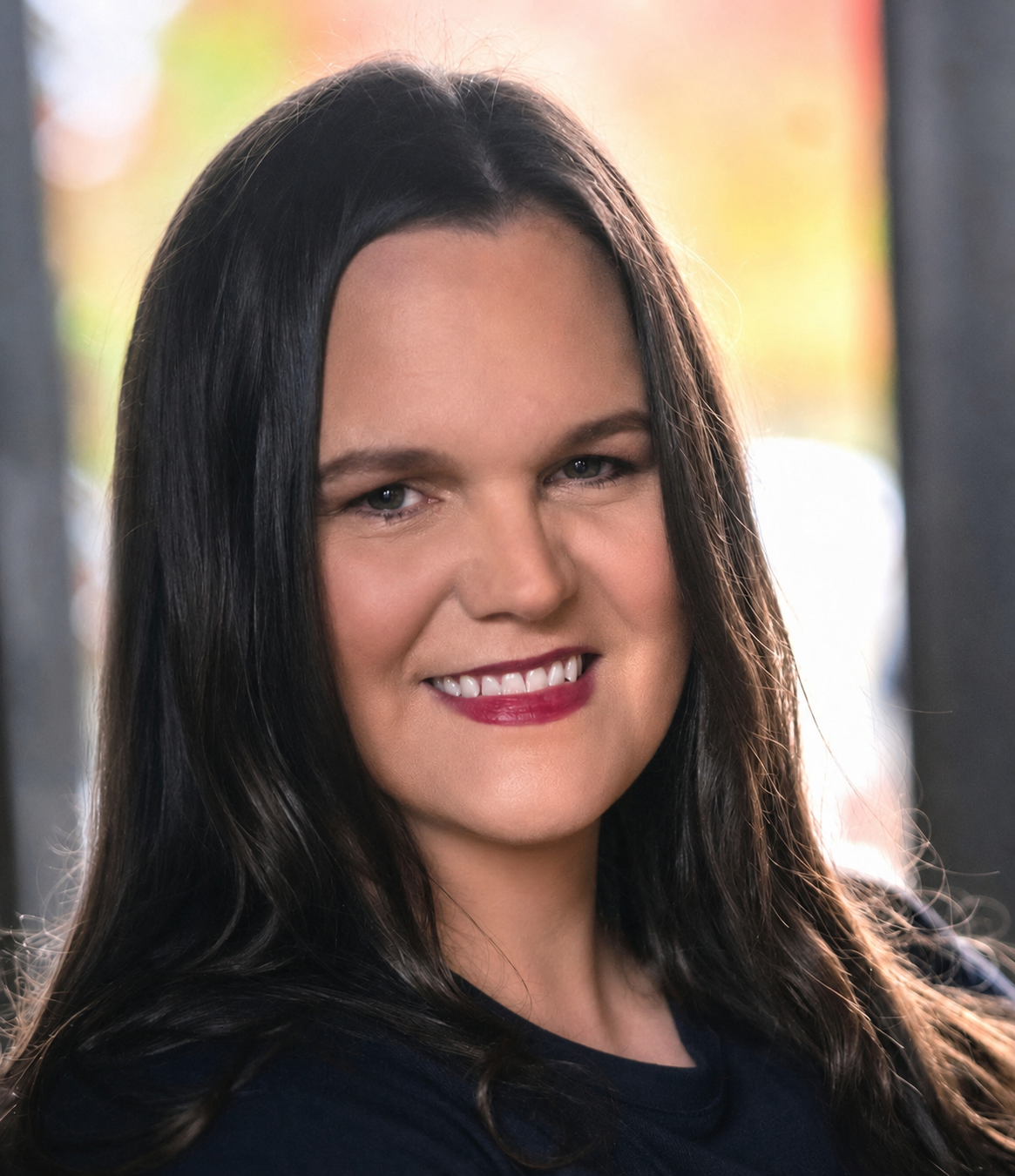
Melissa Martin, LCMHC — EMDRIA-Certified EMDR Therapist.
Melissa Martin is a licensed clinical mental health counselor and EMDRIA-Certified EMDR therapist based in Charlotte, NC. She has been practicing EMDR since 2008 — long enough to have seen what the work actually produces when it is applied with clinical precision rather than approximated.
Her clinical background spans community mental health, correctional settings, and direct work at a substance use treatment center. She brings that range to private practice. She is not rattled by complex presentations and does not need a clean, simple clinical picture to work effectively.
Her approach integrates ego state therapy, the Adaptive Information Processing model, Polyvagal Theory, cognitive therapy, and EMDR into work that addresses trauma at every level simultaneously. For clients who have done years of talk therapy and found the ceiling, that integration is usually what has been missing.
On coordination with Evan: if you are working with both of us, I stay informed about the arc of your work with Melissa at a clinical level — enough to maintain coherence between what happens in individual sessions and what happens in trauma processing. I do not review her session notes routinely. What you share in her sessions is held with the same confidentiality as anything you share in mine. Any coordination happens in your interest and with your awareness.
In person in Charlotte. Virtual across North Carolina.
Melissa sees clients in person at her office in Charlotte, about 30 minutes south of Cornelius and accessible from most Lake Norman communities. Both trauma-focused talk therapy and EMDR are available in person.
Virtual sessions are available statewide for both service types. The research on virtual EMDR is clear: outcomes are comparable to in-person delivery. Melissa has extensive experience conducting both formats remotely.
In-person office: 6911 Shannon Willow Road, Suite 200, Charlotte, NC 28226
Virtual sessions: Available to clients anywhere in North Carolina.
Rates: Trauma-focused talk therapy: $280 per 53-minute session. EMDR: $400 per 90-minute session. Private pay only. Superbills available for out-of-network reimbursement.
How to get started.
Two paths.
If you are already working with me individually: when trauma-focused work or EMDR comes up as the right clinical direction, I will raise it. We will talk through which format fits and what the arc looks like, and I will make a direct introduction to Melissa.
If you are new to the practice and looking specifically for Melissa's work: start with a free 15-minute consultation with me. Here is what that call is actually for — I will get a clear picture of where you are, which format is the right fit, and what working with Melissa would look like in practice. You will leave knowing whether this is the right direction and what the next step is. If it is not the right fit, I will tell you directly and point you somewhere that is. The call is for you to get clarity, not for me to evaluate you.
If you are currently working with another therapist and want to add trauma processing or EMDR without leaving that relationship, that is a straightforward arrangement. Melissa can work alongside your existing therapist. Bring it up on the consultation call and we will talk through how it works.
Things people usually want to know before they reach out.
If you are weighing private pay against insurance, this post explains the tradeoffs and what to ask your insurer about out-of-network benefits.
Trauma-focused work is most often a complement to individual therapy. If you are not sure whether to start with Melissa or with me directly, the free consultation is the right first step.
If substance use is part of what you are carrying, Evan holds an LCAS license and can work with that directly in individual sessions — sometimes alongside trauma processing with Melissa.
Book Now.
15 minutes with me. You will leave knowing which direction fits, what the next step looks like, and whether this is the right place. I will tell you directly either way.